Vietnam Tourism 2026: 4 Key B2B Trends Travel Agents Need to Know
ASIA DMC
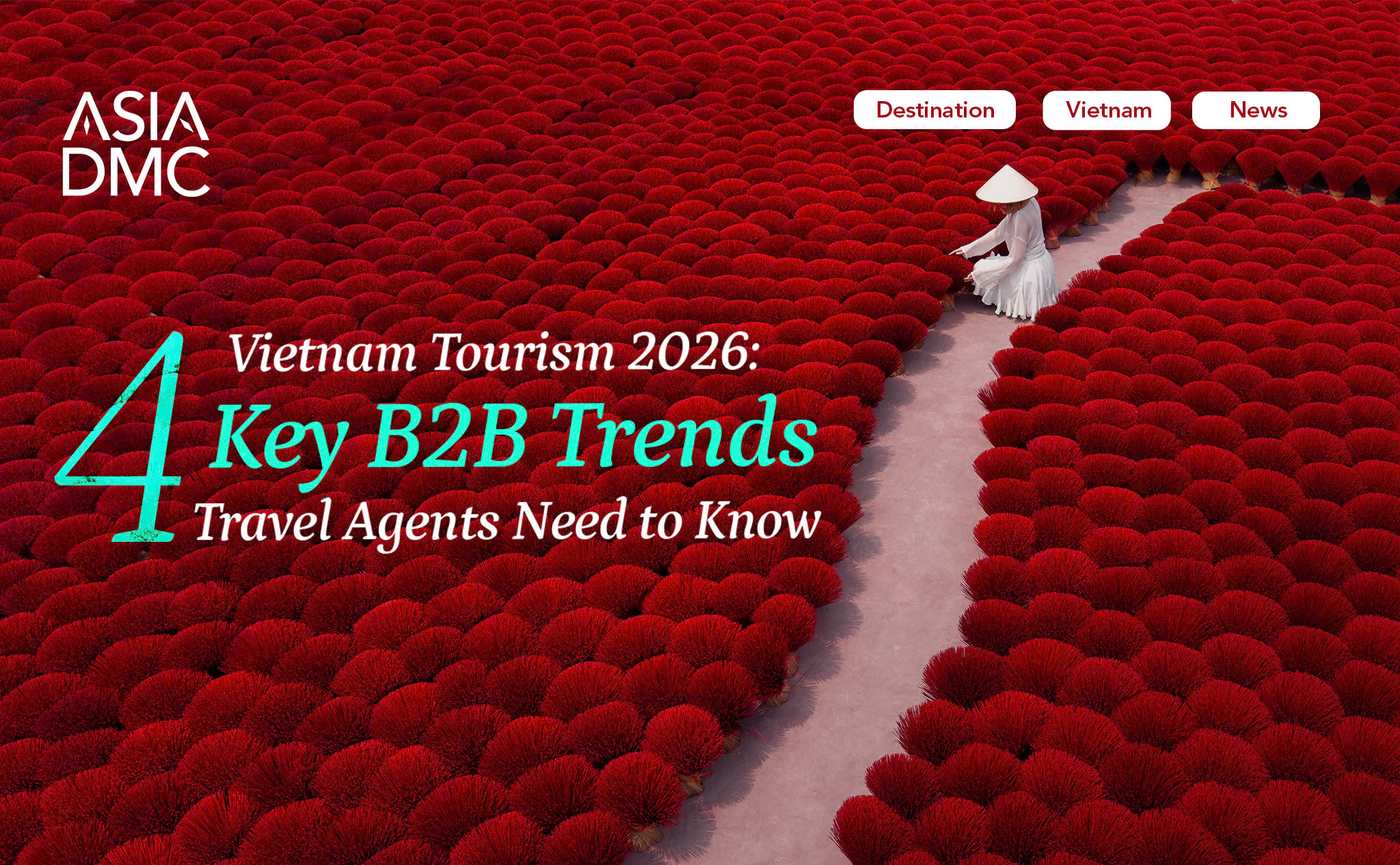
Vietnam Tourism 2026: 4 Key B2B Trends Travel Agents Need to Know
Vietnam is entering a new phase of tourism growth not just in volume, but in how travel is designed, distributed, and experienced.
Driven by strategic direction from the Vietnam National Authority of Tourism, the market is shifting toward higher-value, experience-led travel.
Here are four key trends shaping Vietnam’s tourism landscape in 2026 and what they mean for your strategy.
1. Secondary destinations are rising fast
Overcrowding in major cities is pushing travelers to explore beyond traditional hubs like Hanoi and Ho Chi Minh City.
Emerging demand is growing for:
- Northern highlands (Ha Giang, Sapa alternatives)
- Central coastal destinations beyond Da Nang
- Lesser-known islands and rural regions
B2B Implication:
Diversifying your destination portfolio is no longer optional. Expanding into secondary destinations allows you to:
- Differentiate your offerings
- Reduce price competition
- Capture early demand in emerging markets

2. Experience-Led travel is redefining product design
The era of traditional sightseeing is fading. Today’s travelers are seeking:
- Authentic local interactions
- Hands-on cultural experiences
- Story-driven journeys
Experiences such as coffee farm visits, artisan workshops, and community-based tourism are becoming central to itinerary design.
Impact on B2B travel:
Travel agents must move beyond static programs and create experience-driven products that connect emotionally with travelers – not just physically move them between destinations.

3. FIT travel & European demand are reshaping the market
Vietnam continues to attract strong interest from Europe, particularly from travelers seeking authentic, slower, and experience-driven journeys.
At the same time, traveler behavior is evolving:
- FIT (Free Independent Travel) is increasingly replacing traditional group tours
- Travelers expect flexibility, personalization, and deeper local experiences
- Sustainability and meaningful travel are becoming key decision factors
- Digital-first booking journeys continue to grow
For the European market, this means standard programs are becoming less competitive.
B2B Implication:Travel companies need to rethink product design with:
- Modular and customizable itineraries
- Flexible pricing structures
- Faster quotation and response capabilities
- More experiential and sustainable products
- Stronger local storytelling and destination expertise

4. From volume to value: Vietnam moves upmarket
Vietnam’s tourism strategy is transitioning from high volume to high value.
The focus for 2026 includes:
- Higher-spending travelers
- Premium and mid-premium segments
- Longer stays and deeper engagement
B2B Implication:
Success is no longer measured by the number of bookings, but by:
- Revenue per client
- Experience quality
- Brand positioning
Travel agents must rethink how they package, price, and present Vietnam to align with this shift.

What This Means for Travel Agents
Vietnam in 2026 is more competitive but also more opportunity-rich than ever.
To stay ahead, B2B partners should:
- Invest in experience-driven product development
- Expand beyond traditional destinations
- Adapt to FIT and digital booking behavior
- Focus on value creation, not volume sales
Partnering for the Next Phase of Vietnam Travel
As Vietnam’s tourism industry is evolving, your strategy should, too.
At ASIA DMC, we specialize in designing customized experience-led journeys that align with the latest market trends to help our partners stay competitive in a rapidly changing landscape.
⇒ Looking to upgrade your Vietnam product for 2026? Let’s contact us for tailor-made itineraries!
 0
0